If you're selling software, curriculum tools, or physical products to K-12 schools and districts, you already know the playbook is different. Long sales cycles. Budget constraints. Committees instead of single buyers. And a finite market where one wrong move can quietly close doors across an entire state.
So when it comes to paid advertising, the question isn't just which platform — it's how to use each one given the unique realities of the K-12 buying environment. Here's what the data and real-world campaign results are showing.
First, Respect the Buying Cycle
Before you choose a platform or write a single ad, get the timing right. It's the part most sellers get wrong.
The K-12 buying cycle is highly seasonal. Roughly 60–70% of purchases land in the summer, but the decisions that drive those purchases are made in spring (source: Ed2Market). That means the window to influence a buyer opens months before the money moves. Budget your ad spend accordingly: heavier in Q2 as decisions form, and again in Q4 as next-year planning kicks off.
There's a second constraint that changes the math entirely. The U.S. has roughly 13,000 school districts — a finite, knowable market (source: Tam To Target). Every ad impression carries more weight than it would in a typical B2B market. Generic or poorly targeted campaigns don't just waste budget; they can damage your reputation across a whole region. Precision isn't a nice-to-have here. It's the entire game.
Google Ads: Capture Active Demand
Google is where you catch buyers who are already looking. When a curriculum director searches for a solution, you want to be the result that speaks their exact language.
The numbers back this up. A targeted PPC strategy with ongoing testing for a curriculum provider hit a 41.31% click-through rate in Q1 2025 — far above typical search benchmarks — while increasing lead volume and surfacing useful insights about which content the audience preferred (source: WordStream).
The lever that makes the difference: copy written for a specific role and a specific pain point. Standards-aligned language pulls higher-quality leads because it signals you understand their world. An ad headline like "TEKS-Aligned Digital Literacy for Grades 6–8" attracts buyers who are already mid-evaluation — not browsers, but decision-makers comparing options.
The takeaway: Use Google to capture demand that already exists. Speak to roles, grade bands, and standards by name.
LinkedIn Ads: Reach the Decision-Makers
K-12 buying decisions run through people with titles — superintendents, curriculum directors, school psychologists, technology directors. LinkedIn is the one platform that lets you target by exactly those titles.
This is why LinkedIn is the natural home for account-based marketing in education. You can build campaigns around specific districts or institutions and serve gated content — whitepapers, case studies, outcome reports — directly to the people who sign off on purchases.
Format matters more than most advertisers realize. When you're targeting by role, carousels, short video, and reels consistently outperform static single-image ads. Keep the copy tight, lead with an outcome or a testimonial, and respect that this audience is scanning between meetings.
The takeaway: Use LinkedIn for precision targeting and credibility-building content aimed at the committee, not just one buyer.
Meta Ads (Facebook & Instagram): Build Awareness and Re-Engage
Meta gives you broader reach at a lower cost than LinkedIn. It's less intent-driven, so it's not where you'll close — but it's powerful for top-of-funnel awareness and, especially, for retargeting people who visited your site and didn't convert.
The results can be substantial. A national education advocacy client running paid social on Facebook grew conversions by 600% — and every single Facebook conversion came from mobile (source: Jenny Munn). That last detail is the lesson: if your landing pages aren't built mobile-first, you're leaking conversions before the visitor ever sees your offer.
The takeaway: Use Meta to stay top of mind and to recapture warm traffic — and make sure every page you send them to is fast and flawless on a phone.
Don't Forget Email in the Mix
Paid ads pull people in; email keeps the conversation alive through a sales cycle that can stretch for months. Done well, it outperforms its reputation. One K-12 certification company lifted their email click-through rate to 12.56% — against an industry benchmark of roughly 2% — by tightening message structure, segmenting their audience, and sharpening their calls to action.
The combination is what works: ads to generate the lead, email to nurture it across the spring-to-summer decision window.
The Cross-Platform Framework
Put it together and the strategy is simple to state:
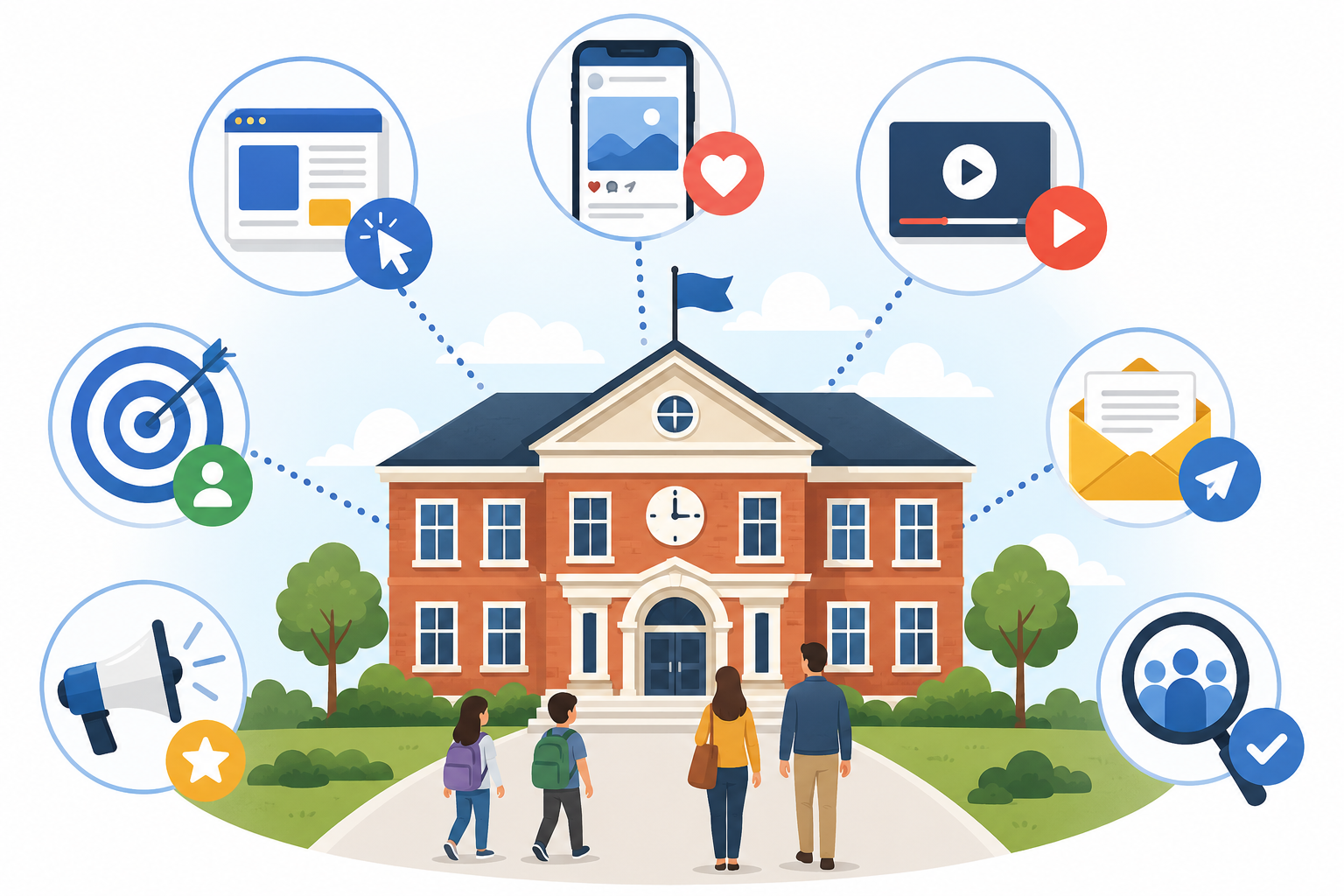
Google captures buyers actively searching — meet them with role- and standards-specific copy.
LinkedIn reaches and educates the decision-makers — ABM targeting plus credible, outcome-led content.
Meta builds awareness and retargets warm traffic — mobile-first, always.
Email nurtures the lead through a long, seasonal cycle.
Timing ties it all together — spend heavier in Q2 and Q4, when decisions are actually being made.
No single channel wins the K-12 market. The companies that grow are the ones that sequence these tools to match how districts actually buy.
A Final Word on Getting It Right
The K-12 market punishes guesswork and rewards anyone who genuinely understands how schools buy — the seasonal rhythm, the committee dynamics, the procurement timelines, the language that signals you're a real partner and not just another vendor.
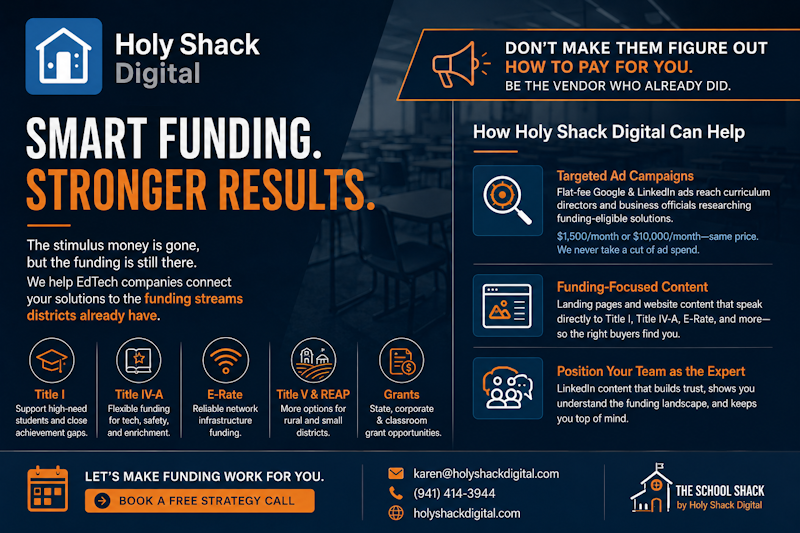
That understanding is exactly what we bring to Holy Shack Digital. Our founder spent roughly two decades in EdTech sales across companies like Boxlight, NextWave STEM, and Avantis Education — so the K-12 buying cycle isn't theory to us, it's where we come from. We pair that domain knowledge with a foundation-first approach: we make sure your website, tracking, and messaging are right before we scale spend, so every ad dollar lands on solid ground. And we work on a flat management fee — never a percentage of your ad spend.
If you're selling into K-12 and want a paid strategy built by people who actually know the buyer, let's talk.
Holy Shack Digital — holyshackdigital.com — karen@holyshackdigital.com — (941) 414-3944 — Bradenton, FL
Ready to Fill Your Calendar?
Book a free strategy call — we'll show you exactly how we'd run your ads and grow your business.