

The Stat Nobody Wants to Hear
53% of mobile users abandon a website that takes longer than 3 seconds to load. For local service businesses running paid ads, that number has a direct dollar value: if your cost per click is $4 and half your visitors leave before the page finishes loading, your real cost per engaged visitor is $8. Your reported cost-per-lead is already factoring in those wasted clicks, which is why slow sites consistently show poor ROAS even when the ad targeting is solid.
Why WordPress Sites Slow Down
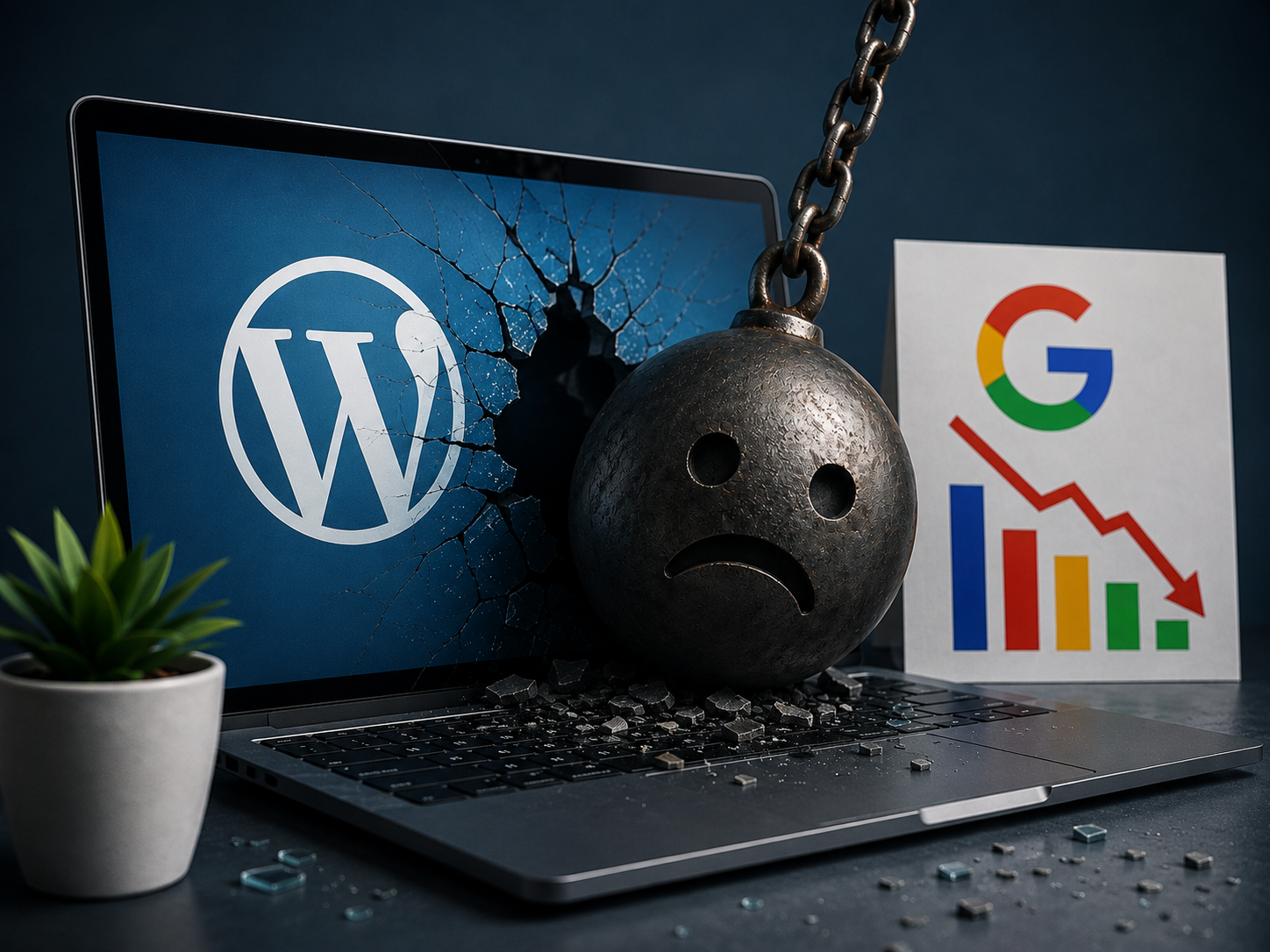
Most small business websites are built on WordPress, often with a drag-and-drop page builder like Elementor or Divi. These tools are convenient to use, but they ship a lot of code — extra JavaScript, extra CSS, plugin conflicts, and large image files that aren't properly optimised. The result is a site that might look great in a preview but scores 40–55 on Google's PageSpeed Insights and loads in 5–8 seconds on a mobile connection.
When you're running Google Ads, Google actually penalises slow landing pages in their Quality Score algorithm, which directly increases your cost per click. A slow site costs you twice — once in lost visitors, and again in higher ad costs.
What We Build and Why It's Different
Every website we build for clients uses Next.js — a modern framework built on React that Google themselves use for many of their properties. Pages are pre-rendered at build time wherever possible, images are automatically compressed and served in next-gen formats, and the total JavaScript bundle is a fraction of what a typical WordPress/Elementor site ships.
The result: our client sites consistently score 90+ on Google PageSpeed Insights and load in under 1.5 seconds on a standard mobile connection. That's not just a technical bragging point — it means every dollar of ad spend goes further, because more visitors actually see the page they clicked to reach.
The Local SEO Bonus
Page speed is also a Google organic ranking factor. A fast, mobile-optimised site built with proper structured data and clean code will rank better for local search terms than a slow, bloated WordPress site, all else being equal. Running paid ads drives immediate traffic — but a fast site also compounds over time through better organic visibility.
If you're currently running ads to a slow website and wondering why your cost-per-lead is high, page speed is one of the first things we'd audit. Book a free strategy call and we'll run a live audit of your current setup during the call.

Ready to Fill Your Calendar?
Book a free strategy call — we'll show you exactly how we'd run your ads and grow your business.